


Славянские народы - Slavic Peoples RU | ENG | ESP | FR | 中国 | العربية
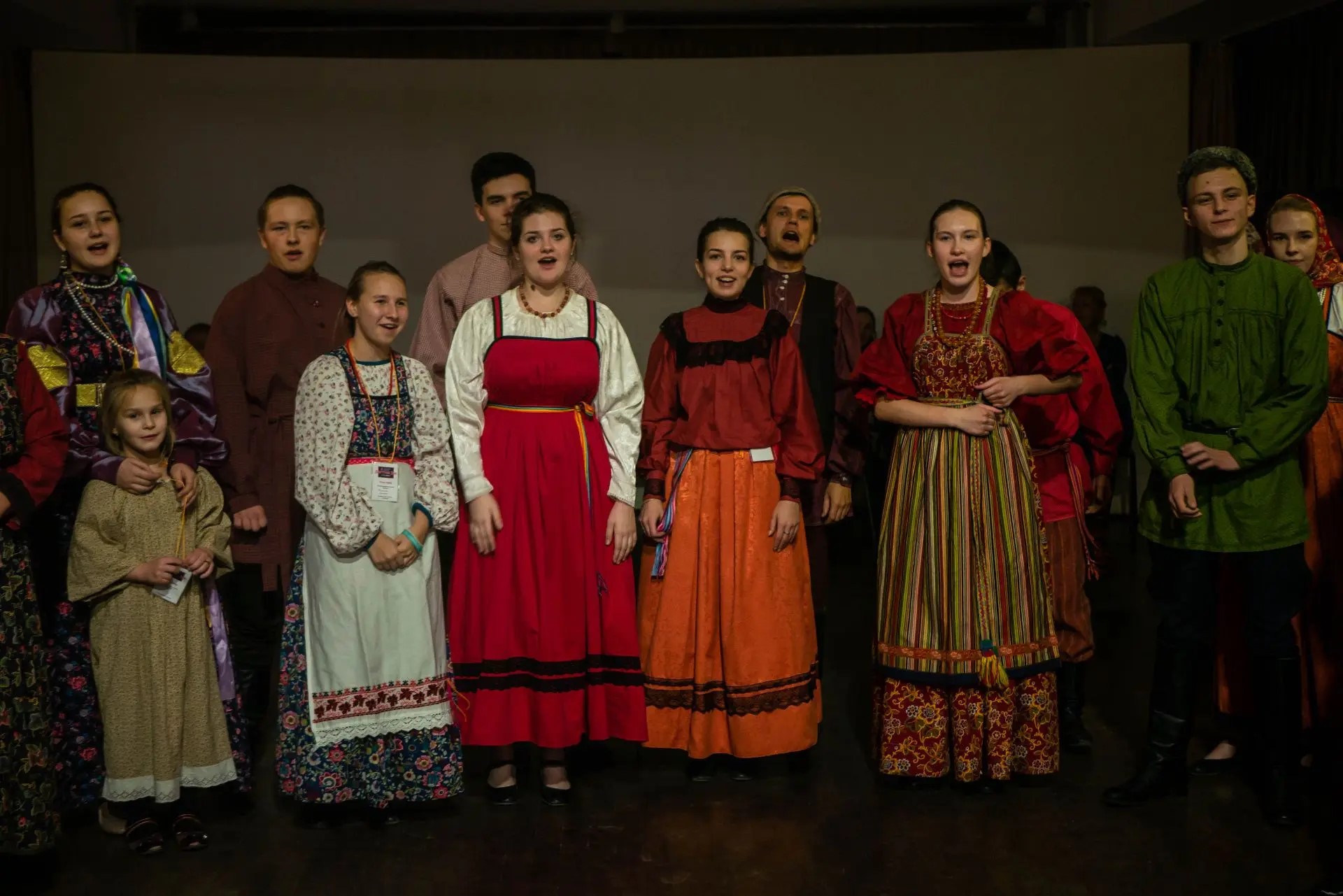
Активное освоение Урала русскими переселенцами началось во второй половине XVI века. Одними из первых на Урал двинулись обитатели Русского Севера. Позднее, в XVII веке, к ним присоединились выходцы из центральноевропейских регионов, Поволжья. С собой первые переселенцы привезли и множество региональных вариантов традиционного русского костюма, основные элементы которого, однако, оставались неизменными.
Традиционный женский костюм русского населения Среднего Урала состоял из рубахи и сарафана. Рубаху нередко шили из белой ткани, но могли, как и для сарафана, использовать “пестрядь” (полотно с тканым орнаментом в клетку или в полоску), шерсть, дорогие шелка. Покрой сарафана и рубахи менялся со временем: глухой сарафан-“ферязь” постепенно выходит из обихода, вначале уступая место косоклинному (ещё долго просуществовавшему в среде русских староообрядцев в качестве особой “молельной” одежды), а затем и прямому сарафану. Завершал традиционный русский костюм передник и пояс, а для замужней женщины обязательным элементом одежды был платок, покрывающий голову. Ворот и рукава рубах, подол передника нередко украшались вышивкой, а на поясах мастерицы могли выткать не только замысловатый узор, но и слова молитвы или благое пожелание - такой пояс на Урале называли поясом “со словесами”.
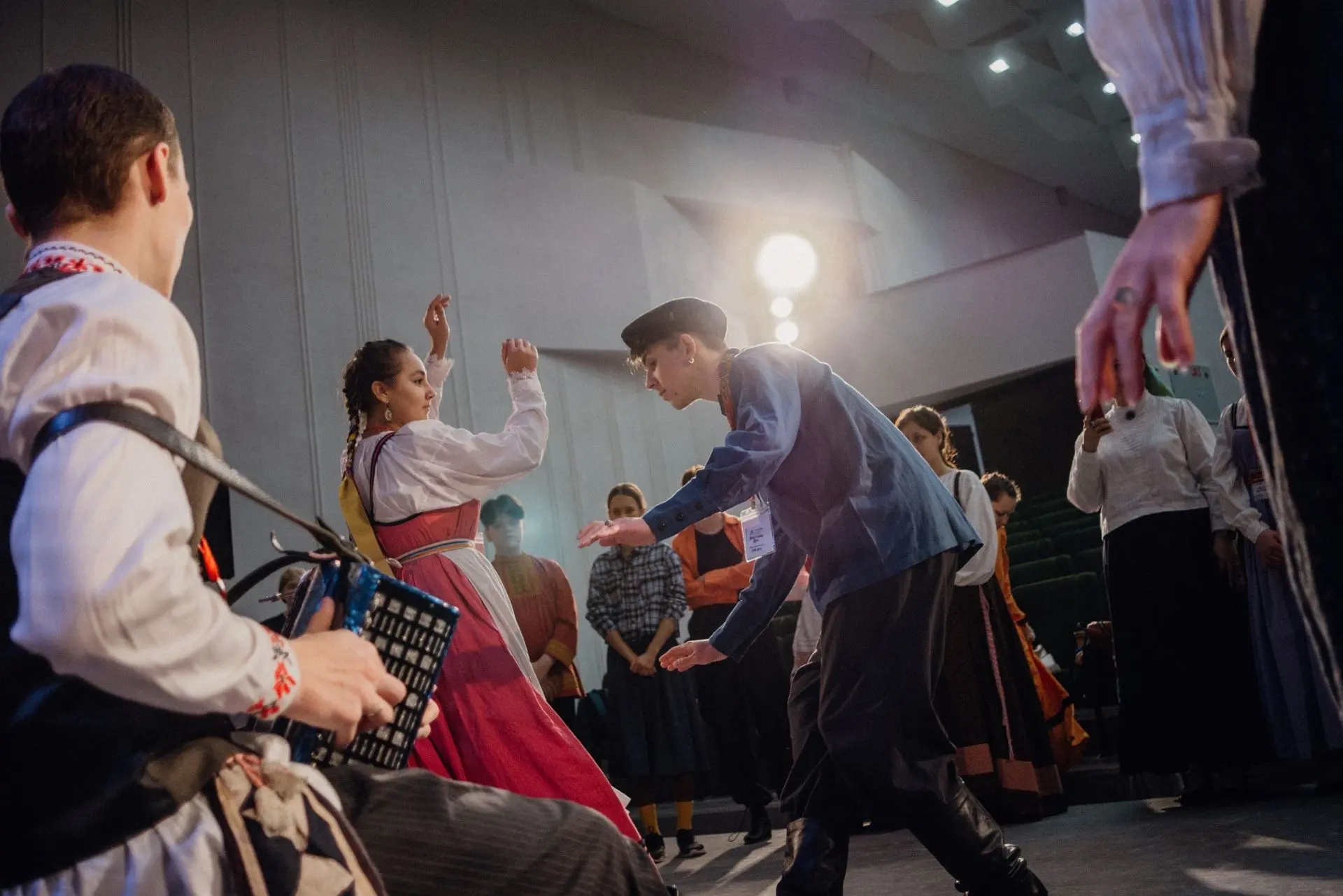
Комплекс русского мужского костюма долгое время был менее разнообразен, чем женский. Он состоял из портов и рубахи, нередко украшенной вышивкой на груди, у ворота и по краям рукавов. На уральских рубахах нередко можно встретить косой ворот. Разрез обычно располагался на левой стороне груди, что является типичным для русских рубах.
Особо стоит выделить одежду молодых парней. Свадебный сезон предполагал наибольшую вычурность и многоцветность в жизни человека, поэтому сельские юноши в поисках невесты старались одеваться максимально ярко и красочно. Они носили рубахи ярких цветов и дорогие бархатные штаны.
English
The active settlement of the Urals by Russian migrants began in the second half of the sixteenth century. Among the first to move to the Urals were the inhabitants of the Russian North. Later, in the seventeenth century, they were joined by settlers from the regions of Central Europe and the Volga area. The first settlers brought with them numerous regional variations of traditional Russian costume, whose principal elements nevertheless remained unchanged.
The traditional women’s costume of the Russian population of the Middle Urals consisted of a shirt and a sarafan. The shirt was often made of white fabric, although, as with the sarafan, “pestryad” — a checked or striped cloth with a woven ornament — wool, and expensive silks could also be used. The cut of the sarafan and the shirt changed over time: the closed sarafan known as the “feryaz” gradually disappeared from everyday use, first giving way to the bias-cut sarafan, which long remained among Russian Old Believers as a special garment for prayer, and later to the straight-cut sarafan. The traditional Russian costume was completed by an apron and a belt, while for a married woman an obligatory element of dress was a headscarf covering the hair. The collar and sleeves of the shirt, as well as the hem of the apron, were often decorated with embroidery, and craftswomen could weave not only intricate ornaments into the belts, but also words of prayer or a benevolent wish. In the Urals such a belt was known as a “belt with words.”
For a long time, the ensemble of Russian men’s clothing was less varied than that of women. It consisted of trousers and a shirt, often adorned with embroidery on the chest, around the collar, and at the edges of the sleeves. Ural shirts frequently featured an oblique collar. The opening was usually placed on the left side of the chest, which is characteristic of Russian shirts.
Particular attention should be given to the clothing of young men. The wedding season implied the greatest splendour and multicoloured richness in a person’s life; therefore, village youths in search of brides sought to dress as brightly and vividly as possible. They wore shirts in brilliant colours and expensive velvet trousers.
Español
La colonización activa de los Urales por los colonos rusos comenzó en la segunda mitad del siglo XVI. Entre los primeros en dirigirse a los Urales se encontraban los habitantes del Norte de Rusia. Más tarde, en el siglo XVII, se les unieron personas procedentes de las regiones centroeuropeas y de la región del Volga. Los primeros colonos trajeron consigo numerosas variantes regionales del traje tradicional ruso, cuyos elementos fundamentales, sin embargo, permanecieron inalterables.
El traje tradicional femenino de la población rusa de los Urales Centrales constaba de una camisa y un sarafán. La camisa se confeccionaba con frecuencia en tela blanca, aunque, al igual que para el sarafán, también podían emplearse la «pestriad» —tejido con ornamento entretejido de cuadros o rayas—, la lana y las costosas sedas. El corte del sarafán y de la camisa cambió con el tiempo: el sarafán cerrado conocido como «feriaz» fue desapareciendo gradualmente de la vida cotidiana, cediendo primero su lugar al sarafán de corte oblicuo, que durante mucho tiempo se conservó entre los viejos creyentes rusos como vestimenta especial para la oración, y posteriormente al sarafán recto. El traje tradicional ruso se completaba con un delantal y un cinturón, mientras que para una mujer casada el elemento indispensable de la indumentaria era un pañuelo que cubría la cabeza. El cuello y las mangas de la camisa, así como el borde inferior del delantal, se adornaban con frecuencia con bordados, y las artesanas podían tejer en los cinturones no solo intrincados ornamentos, sino también palabras de oración o buenos deseos; en los Urales, este tipo de cinturón recibía el nombre de «cinturón con palabras».
Durante mucho tiempo, el conjunto de la indumentaria masculina rusa fue menos variado que el femenino. Constaba de pantalones y una camisa, a menudo decorada con bordados en el pecho, alrededor del cuello y en los extremos de las mangas. En las camisas de los Urales era frecuente encontrar un cuello oblicuo. La abertura se situaba habitualmente en el lado izquierdo del pecho, lo que constituye un rasgo característico de las camisas rusas.
Cabe destacar especialmente la vestimenta de los jóvenes. La temporada de bodas representaba el período de mayor esplendor y policromía en la vida de una persona; por ello, los muchachos de las aldeas, en busca de esposa, procuraban vestir de la manera más vistosa y colorida posible. Llevaban camisas de colores vivos y costosos pantalones de terciopelo.
Français
La mise en valeur active de l’Oural par les colons russes débuta dans la seconde moitié du XVIe siècle. Parmi les premiers à se diriger vers l’Oural figuraient les habitants du Nord russe. Plus tard, au XVIIe siècle, ils furent rejoints par des migrants venus des régions d’Europe centrale et de la Volga. Les premiers colons apportèrent avec eux de nombreuses variantes régionales du costume traditionnel russe, dont les principaux éléments demeurèrent toutefois inchangés.
Le costume féminin traditionnel de la population russe du Moyen-Oural se composait d’une chemise et d’un sarafane. La chemise était souvent confectionnée dans une étoffe blanche, mais l’on pouvait également utiliser, comme pour le sarafane, de la « pestriad » — une toile ornée de motifs tissés à carreaux ou à rayures —, de la laine ainsi que de coûteuses soieries. La coupe du sarafane et de la chemise évolua au fil du temps : le sarafane fermé appelé « fériaz » disparut progressivement de l’usage courant, cédant d’abord sa place au sarafane à pans obliques, qui subsista longtemps chez les vieux-croyants russes en tant que vêtement particulier destiné à la prière, puis au sarafane droit. Le costume traditionnel russe était complété par un tablier et une ceinture, tandis que, pour une femme mariée, un foulard couvrant la tête constituait un élément indispensable de la tenue. Le col et les manches de la chemise, de même que l’ourlet du tablier, étaient souvent ornés de broderies, et les artisanes pouvaient tisser dans les ceintures non seulement des motifs raffinés, mais aussi des paroles de prière ou de bons souhaits ; dans l’Oural, une telle ceinture était appelée « ceinture à paroles ».
Pendant longtemps, l’ensemble du costume masculin russe fut moins varié que celui des femmes. Il se composait d’un pantalon et d’une chemise, souvent ornée de broderies sur la poitrine, autour du col et au bord des manches. Les chemises de l’Oural présentent fréquemment un col oblique. L’ouverture se trouvait généralement sur le côté gauche de la poitrine, ce qui constitue une caractéristique typique des chemises russes.
Il convient de souligner tout particulièrement les vêtements des jeunes hommes. La saison des mariages représentait la période la plus fastueuse et la plus colorée de la vie d’une personne ; c’est pourquoi les jeunes villageois, en quête d’une épouse, cherchaient à s’habiller de la manière la plus éclatante et la plus riche en couleurs possible. Ils portaient des chemises aux teintes vives et de coûteux pantalons de velours.
中文
俄罗斯移民对乌拉尔地区的积极开发始于16世纪下半叶。最早迁往乌拉尔的,是俄罗斯北方地区的居民。后来,在17世纪,又有来自中欧地区和伏尔加河流域的移民加入其中。最初的定居者带来了许多俄罗斯传统服饰的地方性样式,尽管如此,其基本构成始终保持不变。
乌拉尔中部俄罗斯居民的传统女子服饰由衬衫和萨拉凡长裙组成。衬衫通常以白色布料缝制,但与萨拉凡长裙一样,也会使用“杂纹布”——一种带有方格或条纹织花的织物——以及羊毛和昂贵的丝绸。随着时间的推移,萨拉凡长裙和衬衫的裁剪方式逐渐发生变化:封闭式的“费里亚兹”长裙逐渐退出日常生活,最初被斜裁式萨拉凡所取代;这种样式长期保留在俄罗斯旧礼仪派群体中,作为专门用于祈祷的服装;后来又被直身式萨拉凡所替代。传统俄罗斯服饰通常还配有围裙和腰带,而对于已婚妇女来说,覆盖头部的头巾则是必不可少的服饰元素。衬衫的领口和袖口,以及围裙的下摆,常常饰以刺绣;工匠妇女们不仅会在腰带上织出精美的纹样,还会织入祈祷词或美好的祝愿。在乌拉尔,这种腰带被称为“带有文字的腰带”。
长期以来,俄罗斯男子服饰的样式比女子服饰更为单一。其主要由裤子和衬衫组成,而衬衫的胸前、领口及袖口边缘往往饰有刺绣。在乌拉尔地区的衬衫上,经常可以见到斜襟领。开口通常位于胸部左侧,这是俄罗斯衬衫的典型特征。
尤其值得一提的是青年男子的服饰。婚礼季节被视为人生中最华丽、最多彩的时期,因此,乡村青年在寻找新娘时,总是尽可能把自己打扮得鲜艳而华美。他们身穿色彩明亮的衬衫和昂贵的天鹅绒裤子。
Arabic
الشعوب السلافية (الروس)
الاستعمار الروسي لجبال الأورال: بدأ الاستعمار النشط لجبال الأورال من قبل المستوطنين الروس في النصف الثاني من القرن السادس عشر. كان من بين الأوائل الذين تحركوا نحو الأورال سكان شمال روسيا. لاحقًا، في القرن السابع عشر، انضم إليهم مهاجرون من مناطق وسط أوروبا ومنطقة الفولغا. جلب المستوطنون الأوائل معهم العديد من الأنماط الإقليمية للزي الروسي التقليدي، لكن عناصره الأساسية ظلت دون تغيير.
الزي النسائي التقليدي: تألف الزي النسائي التقليدي للسكان الروس في جبال الأورال الوسطى من قميص (روباشا) وصدار (سارافان). غالبًا ما كان يُخيط القميص من القماش الأبيض، ولكن يمكن استخدام "بيسترياد" (قماش بنقوش منسوجة على شكل مربعات أو خطوط) أو الصوف أو الحرير الثمين للسارافان أيضًا. تغيرت طريقة خياطة السارافان والقميص مع مرور الوقت: فقد اختفى السارافان المغلق "فيرياز" تدريجيًا من الاستخدام، ليفسح المجال أولاً للسارافان المائل (الذي استمر لفترة طويلة بين الروس المؤمنين القدامى كملابس خاصة للصلاة)، ثم للسارافان المستقيم. كان يزين الزي الروسي التقليدي مئزر (بيريدنيك) وحزام. وللمرأة المتزوجة، كان المنديل الذي يغطي الرأس قطعة ملابس إلزامية. غالبًا ما كانت الياقة والأكمام وحافة المئزر تُزين بالتطريز، ويمكن للحرفيات نسج ليس فقط نقشًا معقدًا على الأحزمة، بل أيضًا كلمات صلاة أو أمنيات طيبة – وكان يسمى هذا الحزام في الأورال بالحزام "ذي الكلمات".
الزي الرجالي التقليدي: ظل الزي الرجالي الروسي أقل تنوعًا من الزي النسائي لفترة طويلة. كان يتألف من سروال (بورت) وقميص (روباشا)، وغالبًا ما كان يزين بالتطريز على الصدر، وحول الياقة، وعلى أطراف الأكمام. على القمصان في الأورال، غالبًا ما نجد ياقة مائلة. عادةً ما يكون الشق على الجانب الأيسر من الصدر، وهو أمر معتاد في القمصان الروسية.
ملابس الشباب: تجدر الإشارة بشكل خاص إلى ملابس الشباب. كان موسم الزفاف يفترض أكبر قدر من الزخرفة والألوان المتعددة في حياة الإنسان، لذلك كان الفتيان في القرى الذين يبحثون عن عروس يحاولون ارتداء الملابس بأكبر قدر ممكن من السطوع والألوان. كانوا يرتدون قمصانًا بألوان زاهية وسروالًا فاخرًا من المخمل.


